Working document — under expert review prior to journal submission
Companion paper: The Anatomy of Autism — cascade mechanism and constitutional susceptibility architecture.
Abstract
Background
Somatostatin (SST) is expressed as two functionally distinct forms arising from two different cell types — SST-28 in gut enteroendocrine D-cells and SST-14 in cortical, hippocampal, and hypothalamic GABAergic interneurons — whose roles in Immune-Derived Autism (IDA) are opposite in direction but sequential in causation. In the gut, SST-28 — the 28-amino-acid somatostatin form produced by intestinal D-cells — is driven into pathological overactivation by chronic opioid peptide-mediated CCK stimulation, tonically suppressing the enteroendocrine secretin, VIP, and gastric acid cascade. In the brain, SST-14 — the 14-amino-acid form expressed by cortical, hippocampal, and hypothalamic GABAergic interneurons — is silenced by loss of the cAMP→PKA→CREB transcriptional drive through two converging mechanisms: NF-κB-mediated CREB suppression driven by chronic cytokine elevation, and Gi-coupled adenosine receptor activation suppressing adenylyl cyclase independently through the CD26-adenosine accumulation arm of the cascade. The result is a double somatostatin paradox: SST-28 overactive in the gut, SST-14 silenced in the brain, same gene, same precursor, opposite dysfunction, sequential causation.
Hypothesis
When SST-14 interneurons are silenced by loss of the cAMP→PKA→CREB drive, the downstream neuropeptide cascade — oxytocin, vasoactive intestinal peptide (VIP), and secretin — loses its upstream coordinating signal simultaneously, producing the social, sensory, sleep, gastrointestinal, cognitive, and motor features of the ASD phenotype cluster. Restoring the cAMP→PKA→CREB→SST-14 transcriptional drive — not merely measuring its suppression — is the proximal therapeutic goal, with recovery of the full neuropeptide cascade as the downstream functional objective.
Framework
This paper proposes that intramuscular immunoglobulin (IMIG) and mesenchymal stem cell (MSC) therapy are parallel upstream pathways to this goal, each targeting a distinct state of SST-14 interneuron silencing. IMIG removes the autoantibody and cytokine burden that suppresses the cAMP→PKA→CREB→SST-14 transcriptional drive in functionally silenced neurons (States 1 and 2); MSC therapy provides the trophic, metabolic, and structural restoration required when neurons are energetically depleted or partially lost (States 2 and 3). A seven-component adjunctive metabolic support framework — zinc, NMN/NR, NAC, sulforaphane, tributyrin or C. butyricum, taurine, and forskolin — provides the foundational metabolic floor improving SST-14 recovery responsiveness regardless of which upstream pathway is used. A biomarker-stratified trial framework with neuropeptide cascade restoration as the primary functional endpoint is proposed.
Autism spectrum disorder (ASD) affects approximately 1 in 31 children[1]. Despite decades of research, no pharmacological intervention has demonstrated consistent efficacy across the broad ASD population. Increasing evidence supports the view that ASD encompasses biologically distinct subgroups, and that therapeutic progress requires identifying the specific biological mechanisms operating within each subgroup[2].
Among the most mechanistically coherent of these subgroups is one defined by immune dysregulation, chronic neuroinflammation, and aberrant neuroimmune signaling[3, 4, 5]. Within this subgroup, the somatostatin signaling axis occupies a position of profound regulatory importance — but in a manner more molecularly specific, and more paradoxical, than prior ASD literature has recognized. The somatostatin gene encodes a precursor cleaved into two bioactive peptides with distinct biological distributions: SST-28, the 28-amino-acid form predominant in the gut; and SST-14, the 14-amino-acid form predominant in cortical, hippocampal, and hypothalamic GABAergic interneurons. In IDA, these two forms are simultaneously dysregulated in opposite directions, through sequential mechanistic causation.
SST-14-expressing interneurons project onto the distal dendrites of cortical pyramidal neurons, gating long-range thalamocortical inputs, generating slow-frequency gamma oscillations and NREM sleep slow waves, and coordinating the timed release of oxytocin, VIP, and secretin from hypothalamic and enteroendocrine output nodes. Their gene expression is driven through a cAMP response element in the somatostatin gene promoter[6, 7], requiring cAMP→PKA→CREB phosphorylation for active transcription. When this transcriptional drive is lost — through NF-κB-mediated CREB suppression or through Gi-coupled adenosine receptor suppression of adenylyl cyclase — SST-14 interneurons are silenced. The downstream neuropeptide cascade they coordinate is simultaneously disrupted. This is not a metaphor: it is the molecular mechanism.
This paper evaluates three therapeutic modalities against the SST-14 silencing target. Section 4 addresses IVIG as the established immunological precedent. Section 5 addresses IMIG as a mechanistically equivalent lower-cost refined alternative documented exclusively by Dr. P.R. Fourie as the only published investigator of its use in autism. Section 6 addresses MSC therapy as the structural and trophic restoration pathway for patients whose SST-14 interneurons require more than immunological clearance. All three are evaluated through the lens of a three-state model of SST-14 interneuron silencing and paired with a candidate adjunctive metabolic support framework. A biomarker-stratified trial framework is proposed in Section 8, followed by discussion in Sections 9.
Section 2
2. SST-14, SST-28, and the Neuropeptide Cascade
2.1 The SST-28/SST-14 Distinction: Same Gene, Opposite Dysfunction
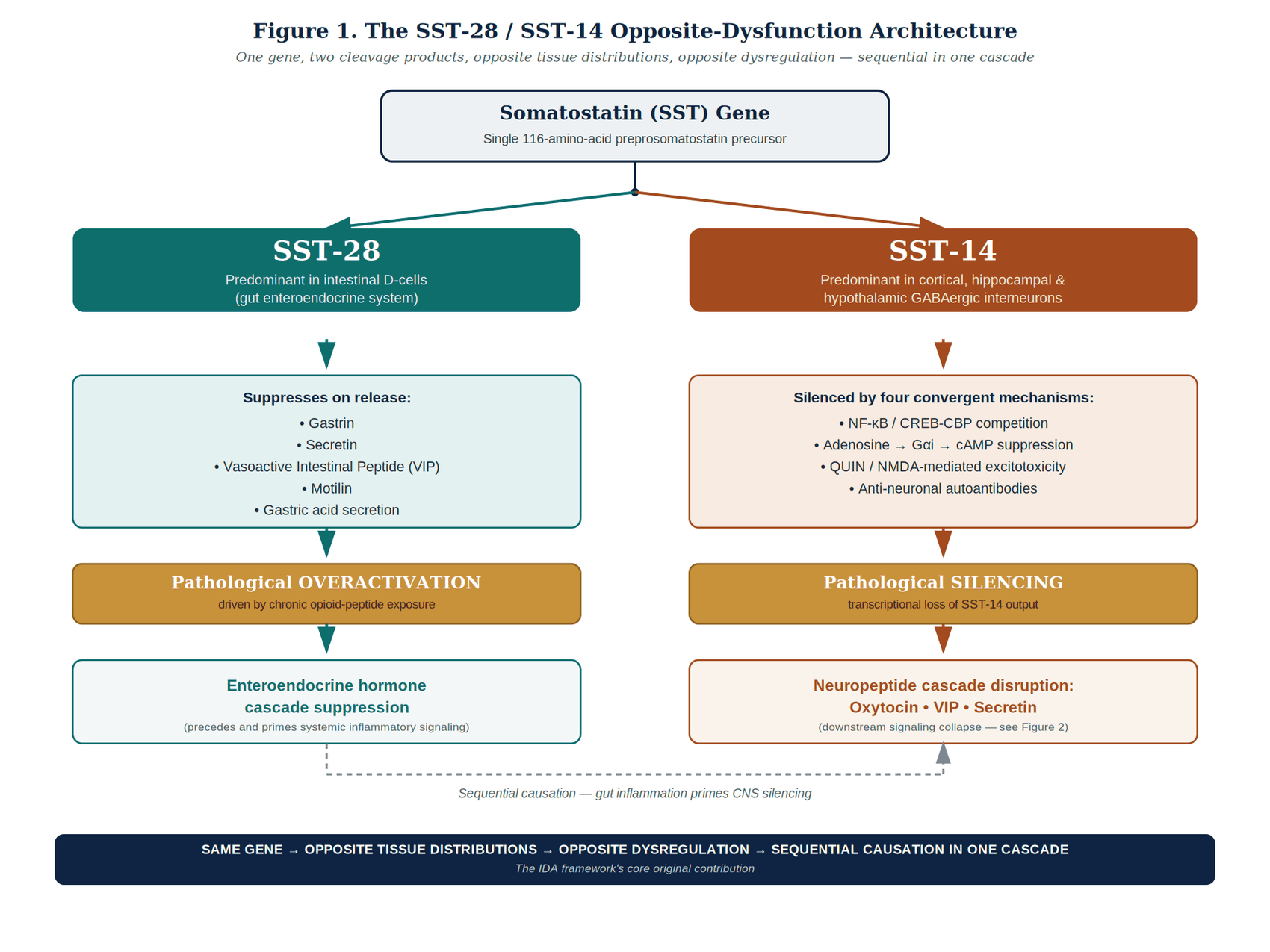
The somatostatin gene encodes a 116-amino-acid preprosomatostatin precursor that is cleaved tissue-specifically into two principal bioactive peptides. SST-28 is the predominant form in intestinal D-cells, where it acts as the primary inhibitory regulator of the enteroendocrine hormone cascade — suppressing gastrin, secretin, VIP, motilin, and gastric acid secretion. SST-14 is the predominant form in cortical, hippocampal, and hypothalamic GABAergic interneurons, where it gates pyramidal neuron excitation and coordinates timed neuropeptide release.
Figure 1 — SST-28/SST-14 polarity: same gene, opposite dysfunction, sequential causation across the gut and brain.
In IDA, these two forms are simultaneously dysregulated in opposite directions through sequential mechanistic causation. In the gut, chronic opioid peptide (casomorphin and gliadorphin) accumulation drives CCK overactivation, which pushes intestinal D-cell SST-28 into persistent overexpression and tonic suppression of the enteroendocrine cascade. In the brain, the same immune cascade — cytokine elevation activating NF-κB and suppressing CREB, and adenosine accumulation activating Gi-coupled receptors and suppressing adenylyl cyclase — silences SST-14 gene transcription by depriving the somatostatin gene’s cAMP response element[6, 7] of its activating cAMP→PKA→CREB phosphorylation signal.
In the gut, SST-28 is overactive — tonically suppressing the enteroendocrine cascade. In the brain, SST-14 is silenced — failing to coordinate the neuropeptide cascade. Same gene, same precursor, opposite dysfunction, sequential causation.
2.2 The cAMP–PKA–CREB–SST-14 Transcriptional Axis
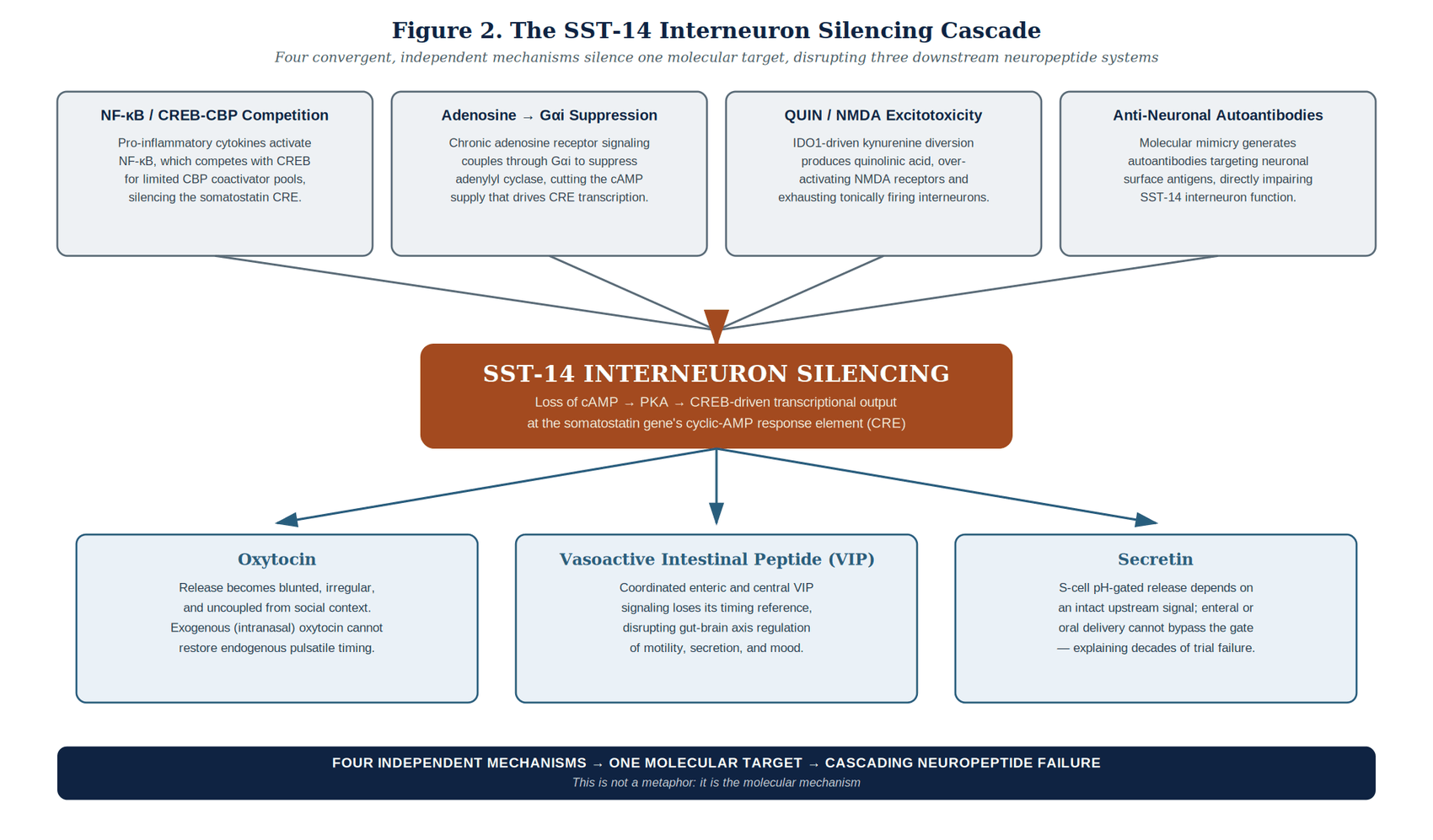
SST-14 gene expression is driven through a cyclic AMP response element (CRE) in the somatostatin gene promoter. Montminy et al. (J Neurosci 1986, PMID 2871140)[6] demonstrated that cAMP regulates somatostatin mRNA accumulation in primary diencephalic cultures, and Montminy et al. (PNAS 1986, PMID 2875459)[7] identified the specific CRE within the rat somatostatin gene. Active transcription requires cAMP to activate protein kinase A (PKA), which phosphorylates CREB at Ser133, enabling CREB to bind the CRE and drive SST-14 gene transcription. Two independent mechanisms in IDA suppress this transcriptional drive simultaneously.
The first is NF-κB-mediated CREB suppression. Pro-inflammatory cytokines (IL-1β, IL-6, TNF-α, IFN-γ) bind surface receptors on SST-14 interneurons and activate NF-κB — nuclear factor kappa B — which suppresses CREB at the transcriptional level, depriving the somatostatin CRE of its activating signal regardless of upstream cAMP levels.
A candidate supporting mechanism for relief of this pathway involves SIRT1, a NAD⁺-dependent deacetylase whose best-characterized action is deacetylation of the NF-κB p65 subunit, suppressing NF-κB transcriptional activity[8] — a direct lever on the same CBP competition described above, not a general anti-inflammatory claim layered on top[9, 10]. No ASD-specific or SST-14-specific evidence yet exists for this link; it is presented here as a Level 2 candidate mechanism — established molecular biology, not yet demonstrated in SST-14 interneurons or ASD cohorts — that plausibly connects NAD⁺ restoration to relief of the NF-κB/CBP competition described above.
The second is Gi-coupled adenosine receptor suppression of adenylyl cyclase. Casomorphin and gliadorphin opioid peptides — produced by pepsin inactivation in the elevated-pH gut — block the CD26 (DPP-IV) receptor site for adenosine deaminase, causing adenosine to accumulate. Accumulated adenosine activates Gi-coupled A1 and A3 adenosine receptors on SST-14 interneurons, which suppress adenylyl cyclase through Gαi. Reduced adenylyl cyclase activity reduces intracellular cAMP, reducing PKA activity and CREB phosphorylation independently of the NF-κB mechanism. The somatostatin CRE is deprived of its activating signal from two mechanistically distinct directions simultaneously.
A third suppressive input operates through the same Gαi pathway but via a distinct receptor: casomorphin and gliadorphin also activate Gi-coupled mu-opioid receptors (MOR) directly on SST-14 interneurons, producing a second independent channel of substantial Gi-mediated adenylyl cyclase suppression. This mu-opioid Gi input is mechanistically independent of adenosine accumulation — it operates as long as opioid peptide load persists, regardless of CD26/adenosine status. The adenosine and mu-opioid Gi inputs are therefore additive: restoring adenosine clearance alone cannot fully recover cAMP output while gut-derived opioid peptides continue activating MOR. Clinically, this explains why methylation cycle support (addressing adenosine) and gut pH restoration (reducing opioid peptide production) must both be addressed to achieve complete Mechanism 2 relief. Forskolin bypasses both Gi receptor inputs simultaneously by activating adenylyl cyclase directly at the catalytic subunit (C2 domain), independent of receptor occupancy on either pathway.
This molecular precision matters clinically: removing the NF-κB-activating cytokine load — through immunoglobulin therapy — relieves one suppressive input and allows CREB to resume driving SST-14 expression. This is why immunoglobulin therapy produces functional recovery in State 1 patients. It does not address the adenosine-driven adenylyl cyclase suppression, which is the domain of the adjunct protocol’s caffeine-independent adenosine clearance support and the methylation cycle restoration arm.
2.3 The Estrogen–cAMP Compensatory Axis and the Male-to-Female Ratio
A partial compensatory mechanism for the adenylyl cyclase suppression affecting SST-14 transcription exists in females and is absent in prepubertal males, providing a specific and testable molecular explanation for the four-to-one male-to-female ratio in ASD. Aronica et al. (PNAS 1994, PMID 8078914)[11] established that estradiol activates adenylyl cyclase through a non-classical membrane-initiated pathway, upregulating adenylyl cyclase VII and generating cAMP independently of the Gi-mediated adenosine suppression. Qiu et al. (J Neurosci 2003, PMID 14573532)[12] characterized this complete signaling chain specifically in hypothalamic neurons — the exact neuronal population where SST-14 silencing and PVN oxytocin disruption operate — identifying the receptor as a membrane Gq-coupled estrogen receptor (Gq-mER) pharmacologically distinct from nuclear ERα/ERβ, with the synthetic ligand STX demonstrating approximately 10⁶-fold lower nuclear ER affinity than estradiol. This Gq-mER is also molecularly distinct from the G protein-coupled estrogen receptor (GPER/GPR30) — a separate non-classical estrogen receptor at which some phytoestrogens are active — since Kelly & Qiu (Brain Res 2010, PMID 20807512)[13] confirmed that STX and estradiol retain full efficacy in GPR30 knockout mice. Single-cell RT-PCR confirmed expression of both PKCδ and adenylyl cyclase VII in GABA, POMC, and dopamine neurons of the arcuate nucleus. Roepke et al. (Front Biosci 2011, PMID 21196248)[14] reviewed the broader physiological consequences of this membrane-initiated estrogen signaling in the brain.
Because the somatostatin gene contains a CRE[6, 7], the Gq-mER-generated cAMP drives SST-14 gene transcription through CREB, partially counteracting the NF-κB-mediated CREB suppression operating simultaneously. A female carrying equivalent upstream cascade burden retains a degree of SST-14 expression through the Gq-mER compensatory pathway that a prepubertal male cannot access.
At puberty, testosterone-to-estradiol conversion through brain aromatase provides prepubertal males with their first access to this compensatory pathway — accounting for the spontaneous improvement in social, communicative, and behavioral function that families frequently report in male autistic children at puberty, and for skill emergence following growth spurts through the coincident IGF-1 trophic surge. The proposed trial's population would therefore be predominantly male and predominantly prepubertal. The Gq-mER compensatory axis should be considered in secondary analyses of any female participants showing atypically rapid State 1 recovery, as noted in the Limitations section.
2.4 Cortical Architecture of SST-14 Interneurons
SST-14-expressing interneurons project preferentially onto the distal dendrites of cortical pyramidal neurons, gating the integration of long-range thalamocortical and corticocortical inputs before they reach the soma[15]. This anatomical position makes them the primary arbiter of top-down and associative information flow — directly relevant to the social cognition, sensory integration, and cognitive flexibility deficits in ASD. SST-14 interneurons also generate slow-frequency gamma oscillations and contribute to theta-band propagation and NREM sleep slow waves[16], underpinning working memory, attentional gating, and sleep architecture. The SST-14 peptide acts on five G-protein-coupled receptors (SSTR1–5) to exert inhibitory effects on hormone secretion, neuronal excitability, and immune cell function[17].
A critical architectural feature is the relationship between SST-14 and VIP interneurons within cortical microcircuits. VIP-expressing interneurons — activated by neuromodulatory inputs including oxytocin — inhibit SST-14 interneurons strongly and pyramidal cells weakly, producing the VIP→SST-14→pyramidal disinhibitory circuit that gates cortical gain during attention, social interaction, and learning[18]. When SST-14 interneurons are chronically silenced, this circuit cannot engage normally. Restoring SST-14 transcriptional activity and tonic firing is a prerequisite for normal VIP-mediated circuit function. The cAMP→PKA→CREB drive must be restored before the downstream cascade can flow.
2.5 The Downstream Neuropeptide Cascade
Three neuropeptide systems whose dysfunction maps directly onto core ASD features are gated by SST-14 interneuron output.
Secretin. Secretin is released from duodenal S-cells in response to luminal acid and fat, and acts on the brain via vagal afferents and direct receptor expression in the cerebellum, hypothalamus, and hippocampus to modulate social behavior and cerebellar motor learning[19]. SST-28 inhibits secretin release at the enteroendocrine level — this is the gut arm of the somatostatin cascade operating through SST-28 overactivation. Simultaneously, SST-14 silencing in the brain removes the central neural coordination of gut-brain peptide integration that secretin signaling requires for its brain-side effects. Secretin faces compound failure from both gut and brain arms of the cascade.
The early clinical observation by Horvath et al. (1998) that secretin infusion produced behavioral improvements in some autistic children, and the subsequent consistent failure of unselected RCTs to replicate this, is mechanistically explicable: intravenous secretin bypasses the blocked SST-28-mediated S-cell release mechanism entirely and delivers plasma secretin directly. In children whose SST-14 interneuron pool retained sufficient functional capacity to use the signal, transient behavioral improvement was real. In children whose SST-14 interneurons were more severely silenced, or whose downstream receptor expression was also impaired, secretin administration produced no benefit. The secretin trials enrolled unselected ASD populations — the same methodological limitation producing null results in unselected IVIG and MSC trials.
Oxytocin. SST-14 interneurons project extensively onto hypothalamic neurosecretory nuclei and are positioned, through local GABAergic circuitry, to influence neurosecretory output broadly; direct evidence for SST-14-specific gating of oxytocin release timing has not yet been established, and this connection is presented as a plausible, testable extension of the model rather than a demonstrated mechanism[20]. When the cAMP→PKA→CREB→SST-14 transcriptional drive is suppressed, oxytocin release becomes blunted, irregular, and uncoupled from social context. Repeated intranasal oxytocin trials have failed to produce consistent behavioral benefit[21] — mechanistically explicable: exogenous oxytocin cannot restore the circuit timing, pulsatility, and social-contextual coupling that SST-14 coordination provides. The cAMP→PKA→CREB→SST-14 transcriptional drive must be restored before endogenous oxytocin can resume coordinated release. A second, mechanistically independent route to oxytocin suppression operates through IDO1 directly, without requiring SST-14 silencing as an intermediate step: sustained IDO1 activation diverts tryptophan away from serotonin synthesis, and the resulting serotonin deficit impairs 5-HT2 receptor-mediated signaling in the hypothalamic paraventricular nucleus, independently suppressing oxytocin release. Launay et al.[22] directly measured IDO activation, kynurenine pathway metabolites, NAD⁺ levels, and plasma oxytocin in the same ASD cohort (n=271) and found NAD⁺ deficit strongly correlated with plasma oxytocin — human evidence that this hypothalamic route operates as a measured consequence of kynurenine pathway dysregulation, not merely a theoretical one. This means oxytocin suppression can occur, or worsen, independent of SST-14 status, reinforcing why oxytocin replacement fails regardless of which upstream mechanism dominates in a given individual.
VIP. Cortically, VIP interneurons are the primary disinhibitory arm releasing pyramidal neurons from SST-14-mediated inhibition during appropriate behavioral states. Peripherally, VIP is a key enteric neuropeptide regulating mucosal secretion, gut motility, and intestinal immune homeostasis[23]. SST-28 in the gut directly suppresses VIP secretion from enteroendocrine cells, connecting the gut arm of the SST dysregulation to the gastrointestinal phenotype many of these children exhibit.
2.6 Mechanisms of SST-14 Interneuron Silencing
Four convergent mechanisms silence SST-14 interneurons in neuroinflammatory ASD. (1) Pro-inflammatory cytokines suppress SST-14 gene transcription through NF-κB pathway activation and CREB suppression[24, 25], depriving the somatostatin CRE of its activating signal. (2) Autoantibodies targeting neuronal surface proteins directly impair SST-14 interneuron synaptic function without causing structural damage[4]. (3) IDO1 activation diverts tryptophan toward quinolinic acid (QUIN), driving NMDA-mediated excitotoxic calcium influx and mitochondrial stress in tonically firing SST-14 interneurons while depleting NAD⁺ precursor availability[22]. (4) Chronically activated microglia generate reactive oxygen species that impose oxidative stress preferentially on SST-14 cells, which have lower intrinsic antioxidant capacity than parvalbumin interneurons[26]. These mechanisms differ in reversibility and in which therapeutic intervention addresses them most directly.
Figure 2 — The two convergent mechanisms suppressing the cAMP→PKA→CREB→SST-14 transcriptional drive: NF-κB-mediated CREB suppression and Gi-coupled adenosine/mu-opioid suppression of adenylyl cyclase.
Section 3
3. Three States of SST-14 Interneuron Silencing
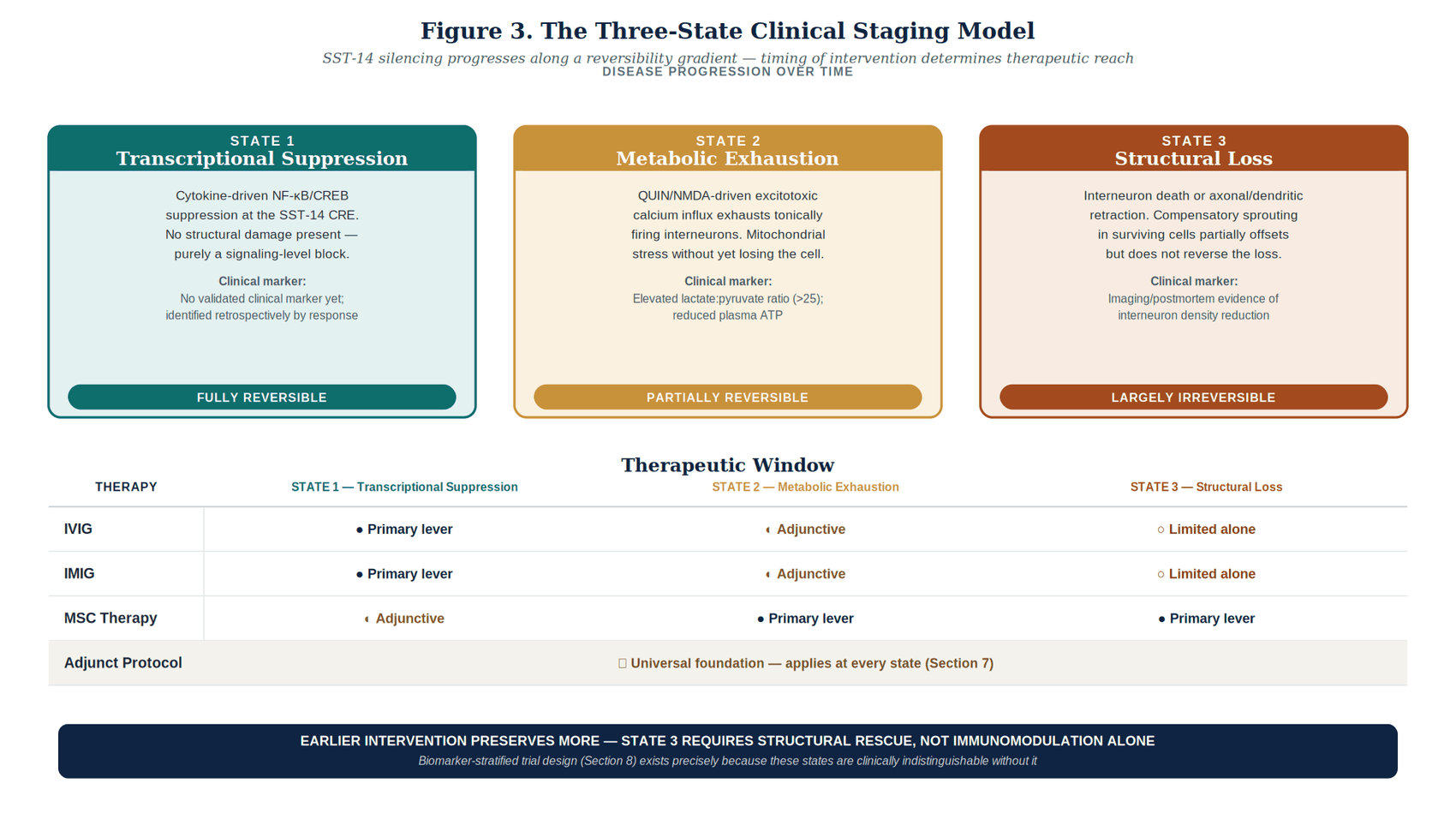
Understanding which upstream intervention a patient requires depends on identifying the predominant state of SST-14 interneuron silencing. Three mechanistically distinct states are proposed, each with different therapeutic implications.
Figure 3 — The three states of SST-14 interneuron silencing and their distinguishing biomarker and treatment logic.
State 1 — Transcriptional Silencing, Structural Integrity Preserved
SST-14 interneurons are anatomically and metabolically intact. SST-14 gene transcription is suppressed by cytokine-driven NF-κB activation — which inhibits CREB and deprives the somatostatin CRE of its activating signal — and/or by autoantibody-mediated functional silencing of surface receptors. The cAMP→PKA→CREB transcriptional drive is blocked at the CREB step; the interneuron’s structural and metabolic machinery for recovery is present. SST-14 interneurons show documented sensitivity to inflammatory signals, with cytokine elevation reversibly suppressing SST gene expression and co-expressed markers in the absence of structural damage[27]. Whether removal of the cytokine and autoantibody burden restores cAMP→PKA→CREB-driven SST-14 gene expression in vivo has not yet been directly demonstrated following immunological intervention — this is precisely the mechanistic question that justifies conducting a biomarker-stratified clinical trial to measure it directly, as proposed in Section 8. The mechanistic prediction is clear: removing NF-κB-activating cytokine pressure allows CREB to resume driving SST-14 gene expression through the somatostatin CRE[6, 7]. This is the primary target state for immunoglobulin therapy — both IVIG and IMIG.
State 2 — Metabolic Exhaustion, Structural Integrity Preserved
SST-14 interneurons are structurally intact but functionally silent or intermittent due to energetic insufficiency. Kynurenine pathway diversion depletes the NAD⁺ substrate that tonically firing SST-14 interneurons require to sustain the metabolic cycle underpinning cAMP→PKA→CREB→SST-14 transcription and tonic firing. Even if NF-κB-mediated CREB suppression is relieved by immunoglobulin therapy, the interneuron cannot resume tonic firing without metabolic substrate restoration — the cAMP-CREB drive may be partially released but the energy to execute tonic firing is absent. State 2 is suggested clinically by elevated lactate-to-pyruvate ratio (L:P >25) and reduced plasma ATP[28]. The adjunct protocol — particularly NMN/NR — carries primary responsibility for restoring the NAD⁺ substrate pool, and in milder State 2 presentations, IMIG (relieving transcriptional suppression) combined with the adjunct protocol (restoring metabolic substrate) may be sufficient to resume tonic firing. However, substrate availability and mitochondrial hardware are separable constraints: where sustained kynurenine-driven excitotoxicity has also impaired mitochondrial biogenesis or damaged the organelles themselves, restoring NAD⁺ substrate cannot compensate for a functionally reduced mitochondrial pool — analogous to supplying fuel to a damaged engine. MSC-derived mitochondrial transfer delivers intact functional organelles directly, providing structural metabolic rescue that substrate repletion alone cannot replace once mitochondrial damage, rather than mere depletion, predominates.
State 3 — Partial Structural Loss
Sustained excitotoxic and oxidative injury has driven SST-14 interneuron apoptosis. Unlike parvalbumin interneurons, SST-14 interneurons demonstrate relative structural resilience and can sprout compensatory axon collaterals after partial loss[29]. Nevertheless, in longstanding neuroinflammatory ASD, meaningful reduction in the SST-14 interneuron pool may have occurred, requiring regenerative or trophic support beyond what immunological clearance alone can provide. MSC therapy is the primary intervention for State 3; tributyrin HDAC inhibition provides a cAMP-CREB-independent transcriptional boost to surviving SST-14 cells that may partially compensate for the reduced interneuron pool.
These states are not mutually exclusive within a given patient. The biomarker profile guides upstream pathway assignment while the adjunct protocol is proposed as a foundational support layer across all states.
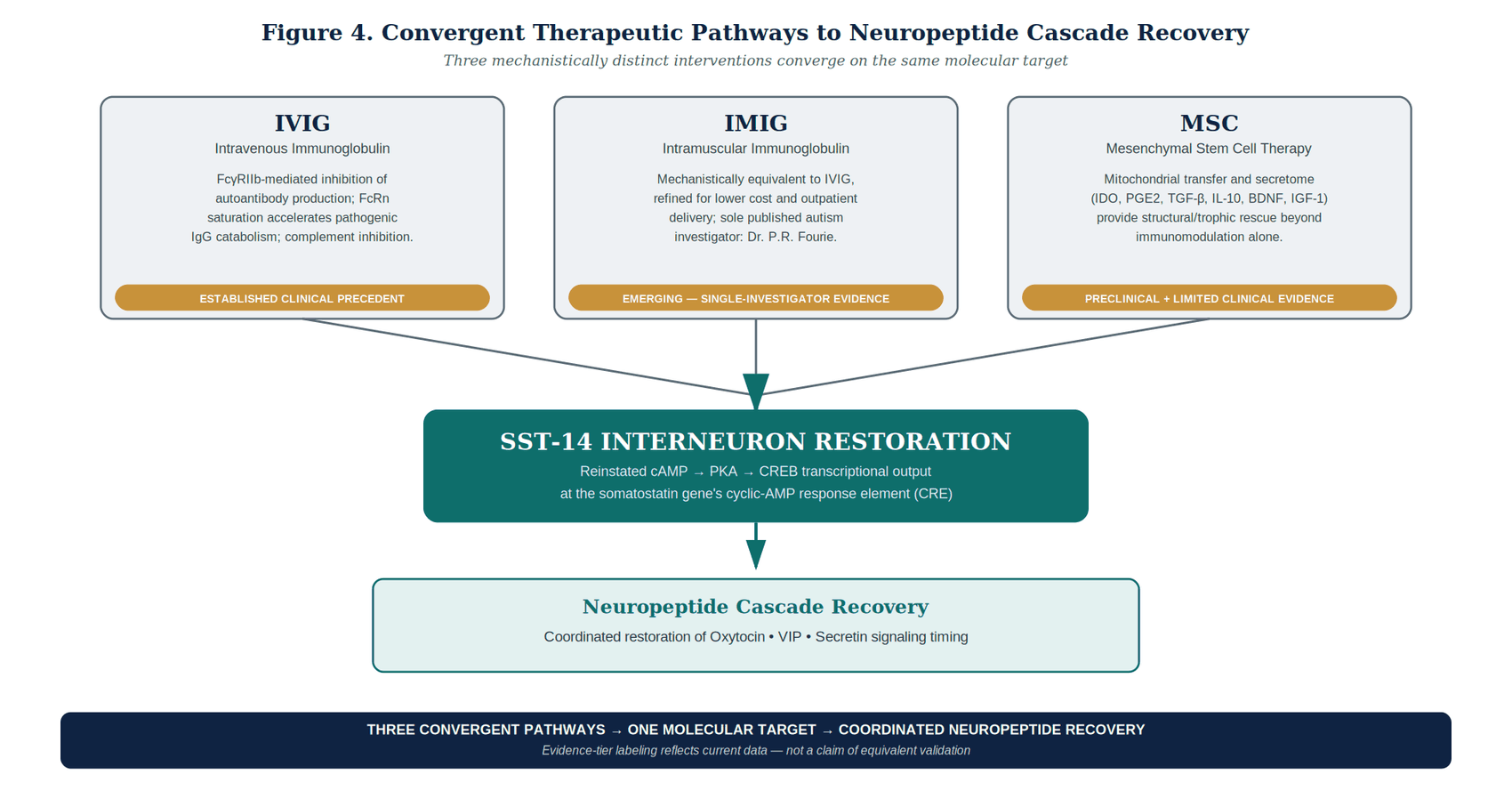
Intravenous immunoglobulin is the most extensively studied immunological intervention in ASD, with 27 published studies and a substantial body of controlled evidence in autoimmune-associated and neuroinflammatory subgroups. Its relevance to SST-14 transcriptional restoration is established through multiple mechanisms: FcγRIIb-mediated inhibition of autoantibody production and cytokine release, FcRn saturation accelerating catabolism of pathogenic IgG, complement pathway inhibition, and idiotypic neutralization of specific pathogenic antibodies[30]. The biological rationale for IVIG’s effect on SST-14 transcriptional restoration in State 1 is well-supported: removal of TNF-α, IL-1β, and IL-6 lifts NF-κB-mediated CREB suppression, allowing CREB to resume driving SST-14 gene expression through the somatostatin CRE; clearance of autoantibodies targeting neuronal surface proteins removes the functional silencing mechanism. Controlled trials have demonstrated significant improvements in social behavior, language, and repetitive behavior scores in children with elevated neuronal autoantibody titers, consistent with this mechanism[31, 32]. IVIG has also demonstrated clear efficacy in autoimmune NMDA receptor encephalitis, where autoantibody-mediated silencing of specific neuron populations produces reversible behavioral and cognitive deficits[33]. Wang et al. (Mol Autism 2025)[34] provide direct experimental validation that SST-14 interneuron hypoactivity in the mPFC produces social interaction deficits, and that optogenetic activation of mPFC SST interneurons rescues sociability, establishing SST-14 interneuron function as causally required for social behavior, consistent with the proposed trial’s primary mechanistic claim.
The peripheral immune dysfunction that immunoglobulin therapy targets in ASD has been characterized with increasing precision. A documented pattern of elevated total NK cell numbers combined with paradoxically impaired cytolytic activity — NK cells at resting levels upregulating cytokine production, perforin, and granzyme B, but showing significantly decreased cytotoxic function on stimulation — has been reported in ASD children and interpreted as NK cells functionally exhausted in vivo[35]. This pattern mirrors NK cell dysfunction in established autoimmune disorders including MS, T1DM, SLE, and RA, and is consistent with the autoimmune component the IDA framework proposes[35]. Regulatory T cells (Tregs) are simultaneously reduced in ASD, with circulating CD4+CD25high Treg frequency correlating with disorder severity, and plasma TGFβ1 — a key Treg effector molecule — significantly lower than in controls[35]. The depletion of the immune regulation that should terminate the inflammatory cascade is the immune-side mechanism for the self-reinforcing biological latch described in Section 2: SST-14 silencing removes anti-inflammatory inhibitory tone, while Treg depletion removes the adaptive immune brake that should prevent cytokine-driven NF-κB from sustaining itself. IMIG’s Fc receptor-mediated NK cell modulation and Treg-supportive immunological effects directly address this dual dysfunction, providing a second mechanistic rationale for immunoglobulin therapy beyond direct autoantibody clearance.
4.2 Limitations: Cost, Burden, and Dependency
Despite its evidence base, IVIG carries significant practical limitations. In the United States, annual treatment costs exceed $30,000 per patient[36]. Administration requires IV access, specialist infusion center, and 4–8 hours monitoring per session. Approximately 85% of patients who respond to IVIG lose gains within weeks of cessation[32], creating an effectively indefinite treatment commitment — consistent with the model’s prediction that the upstream drivers of NF-κB-mediated CREB suppression continue operating unless the gut-immune cascade is also addressed. These limitations motivated the development of IMIG as a refined alternative.
4.3 State Specificity
IVIG is optimally effective for State 1 SST-14 silencing: its mechanism relieves the NF-κB-CREB transcriptional suppression directly. It contributes to State 2 through reduction of the IDO1-activating cytokine load, but cannot access the mitochondrial/metabolic rescue that MSC therapy provides — MSC remains the primary lever for State 2 (Section 6.2) — and IVIG is insufficient alone for the structural loss of State 3. In unselected ASD populations containing a mixture of states, IVIG’s effect size is diluted by non-State 1 patients — consistent with the variable results seen in broader ASD IVIG trials.
Section 5
5. IMIG: A Refined, Lower-Cost Alternative
5.1 Mechanism and Pharmacological Rationale
Intramuscular immunoglobulin delivers pooled polyclonal IgG via intramuscular depot injection, producing sustained serum IgG levels through slow, controlled absorption kinetics rather than the rapid peak-and-trough profile of intravenous bolus administration[37]. The immunological mechanisms of IMIG are identical to those of IVIG — FcγRIIb-mediated autoantibody and cytokine suppression, FcRn-mediated pathogenic IgG catabolism, complement inhibition, and idiotypic antibody neutralization — and therefore carry the same mechanistic pathway to SST-14 transcriptional restoration: relieving NF-κB-mediated CREB suppression and removing autoantibody-mediated functional silencing, allowing cAMP→PKA→CREB to resume driving SST-14 gene expression through the somatostatin CRE. The depot absorption profile produces a more sustained steady-state IgG level with potentially fewer acute adverse effects.
5.2 Dr. Fourie’s Clinical Experience: The Only Published IMIG-Autism Investigation
Dr. P.R. Fourie, consultant pediatrician and principal investigator, represents the only published investigator who has documented the clinical use of IMIG specifically in autism spectrum disorder. His clinical observations using Beriglobin at approximately $80 per treatment administered one to two times monthly establish IMIG as a practically accessible immunomodulatory intervention with a pharmacological rationale directly parallel to IVIG at a fraction of the cost. The clinical parameters Dr. Fourie has documented — low-volume intramuscular administration, monthly depot dosing, and treatment duration of six months to two years depending on clinical response — form the basis of the trial protocol proposed in Section 8. Total protocol cost of approximately $480–$3,840 per patient over six to twenty-four months at South African pricing — compared to $15,000–$30,000+ annually for IVIG — makes a properly controlled pilot trial fundable without institutional-scale manufacturing grants and positions IMIG as the logical first-phase intervention in a biomarker-stratified study.
This evidence base currently rests on a single published clinician’s experience (Fourie & Armstrong 2024)[38]. This is simultaneously a strength — Dr. Fourie is the world expert on IMIG in ASD — and a transparency obligation in journal submission. The paper does not conceal this; it frames it as the rationale for a multisite trial design, in which replication across sites is the scientific answer to single-site evidence.
5.3 State Specificity and Relationship to IVIG
IMIG shares IVIG’s state specificity: it is the primary upstream intervention for State 1 SST-14 transcriptional silencing, contributes to State 2 through reduction of the IDO1-activating cytokine load without accessing the mitochondrial/metabolic rescue that keeps MSC therapy as the primary State 2 lever (Section 6.2), and is insufficient alone for State 3. The depot kinetics of IMIG may provide a more sustained baseline IgG level between doses compared to IVIG’s bolus-driven peaks, potentially reducing the relapse rate seen with IVIG on cessation — a hypothesis that the proposed trial is positioned to test through biomarker monitoring of the cAMP-CREB pathway proxies across the dosing cycle.
Section 6
6. Mesenchymal Stem Cells: Trophic Restoration and Structural Recovery
6.1 Mechanism of Action
Mesenchymal stem cells exert their principal therapeutic effects through paracrine secretion rather than engraftment[39]. The MSC secretome includes IDO, PGE2, TGF-β, IL-10, BDNF, NGF, IGF-1, and extracellular vesicles carrying miRNA cargo[40]. MSC behavior is inflammation-gated — the full anti-inflammatory program is deployed only under high IFN-γ and TNF-α conditions, making inflammatory biomarker confirmation essential for patient selection[41]. The proposed mechanism for A1-to-A2 astrocyte transition is twofold: immunoglobulin therapy reduces circulating IL-1α, TNF-α, and C1q (the three microglial-derived signals Liddelow et al. identified as necessary and sufficient to drive A1 polarisation) thereby removing the upstream polarising drive; MSC-derived paracrine factors including TGF-β, hepatocyte growth factor (HGF), and prostaglandin E2 then actively promote A2 polarisation and restore hevin and SPARCL1 synaptogenic protein secretion, recreating the trophic environment required for SST-14 interneuron structural recovery.
6.2 State-Specific Efficacy for SST-14 Transcriptional Restoration
MSCs are applicable across all three states with different primary mechanisms in each. In State 1, Treg induction and cytokine normalization relieve the NF-κB-mediated CREB suppression with greater durability than immunoglobulin therapy’s IgG-half-life-limited action, allowing cAMP→PKA→CREB to resume driving SST-14 gene expression for a sustained period.
In State 2, MSCs provide the metabolic rescue that neither IVIG nor IMIG can access. Mitochondrial transfer via tunneling nanotubes delivers functional mitochondria directly to energy-depleted SST-14 interneurons[42], restoring the mitochondrial ATP production required to sustain the cAMP→PKA→CREB→SST-14 transcriptional and firing cycle that NAD⁺ depletion and TCA cycle disruption have suppressed. State 2 is the state for which MSC’s mechanistic advantages are most pronounced and least replicable by other means.
In State 3, direct evidence from a neuroinflammatory mouse model demonstrates that intranasal MSC therapy restored SST-14-positive interneuron populations in the dentate gyrus and partially recovered impaired social behavior[43] — the only existing evidence that any intervention can support SST-14 interneuron survival, compensatory sprouting, and structural network recovery. IMIG or IVIG may serve a preparatory stabilizing role in State 3 before MSC introduction, preventing ongoing autoantibody-mediated interneuron damage while MSCs begin their trophic restoration program.
6.3 Clinical Evidence in ASD
Phase I clinical trials of MSC therapy in ASD have produced mixed but cautiously positive signals. A controlled trial found significant improvements in CARS, ABC, and CGI scores in groups receiving combined cord blood mononuclear cells and UC-MSCs versus rehabilitation-only controls at 24 weeks[44]. Randomized placebo-controlled trials of cord blood infusion in similar populations have produced null or minimal results[45] — consistent with the state-mismatching hypothesis: unselected populations dilute effect with non-State 2/3 patients who lack the metabolic and structural substrate MSCs are designed to address.
6.4 Cost and Access Considerations
MSC therapy carries substantially higher per-treatment costs than IMIG, driven primarily by GMP-grade cell manufacturing. Commercial clinic pricing runs $15,000–$25,000 per infusion cycle in the US market, though clinical trial contexts with grant-funded manufacturing reduce this significantly. Unlike IVIG’s ongoing monthly cost burden, MSC therapy requires only one to two treatment cycles, making its total protocol cost potentially comparable to twelve months of IVIG despite the higher per-event price. The requirement for institutional sponsorship positions MSC as the natural second-phase intervention following biomarker data from an IMIG pilot.
Section 7
7. Universal Adjunctive Protocol: The Downstream Floor
The adjunct protocol provides the metabolic substrate, antioxidant capacity, and epigenetic conditions without which SST-14 interneuron recovery is biochemically constrained regardless of how effectively the upstream intervention removes immunological or structural pathology. Seven agents address specific constraints on SST-14 function — including direct support of the cAMP-CREB transcriptional axis — that neither immunoglobulin therapy nor MSC therapy fully covers.
Agent
Constraint addressed
SST-14 interneuron and neuropeptide cascade rationale
IDO1 depletes tryptophan from NAD⁺ salvage. SST-14 interneurons cannot sustain tonic firing under NAD⁺ deficiency. NMN/NR restores the metabolic substrate enabling tonic SST-14 firing and downstream peptide cascade output[47]. NAD⁺ restoration also plausibly supports SIRT1-mediated dampening of NF-κB (Section 2.2), giving NMN/NR a candidate State 1 transcriptional rationale in addition to its State 2 metabolic one [8–10].
HDAC inhibition directly upregulates SST gene expression in cortical neurons, restoring cAMP-CREB-independent transcriptional drive to SST-14 interneurons. Tributyrin releases butyrate only after pancreatic lipase hydrolysis in the colon, delivering approximately three times more butyrate to colonocytes[50]. C. butyricum has improved intestinal barrier function and behavioral abnormalities in ASD mouse models[51]. Gut butyrate supports enteroendocrine hormone secretion (GLP-1, PYY) and enteric barrier integrity via FFAR2/FFAR3 signaling[52, 53], a mechanism plausibly extending to the broader enteroendocrine cascade including VIP and secretin, though this specific extension has not yet been directly demonstrated.
Tributyrin pharmacokinetics[50]; C. butyricum ASD models[51]; HDAC-SST studies
Taurine
GABA-A receptor environment; mitochondrial Complex I
GABA-A agonism supports the inhibitory receptor environment at SST-14 synapses. Taurine-tRNA modification enhances Complex I expression, reducing mitochondrial oxidative stress in tonically active SST-14 interneurons[54, 55].
Direct adenylyl cyclase activation (state-independent)
Activates adenylyl cyclase directly at the catalytic subunit, independent of upstream receptor occupancy, bypassing both the NF-κB/CREB and adenosine/opioid-Gi suppression mechanisms simultaneously (Section 2.2). Oral forskolin at 10 mg/day was studied over 6 months in a pediatric-inclusive population for an unrelated indication (asthma)[56]. No ASD-specific or pediatric-ASD dosing and safety data currently exist; this figure is presented as the closest available human dosing precedent, not a validated protocol, and should be confirmed with a treating clinician before use.
Pediatric-inclusive asthma RCT (off-label extrapolation); no ASD-specific data
Table 1. Universal adjunctive protocol: agents, SST-14 interneuron targets, and neuropeptide cascade rationale. Note tributyrin and C. butyricum’s role in providing cAMP-CREB-independent SST-14 gene transcriptional drive via HDAC inhibition.
These seven agents are not redundant — each addresses a distinct constraint on SST-14 interneuron function, consistent with the one-legged stool principle that runs throughout this framework: single-pathway interventions fail because the IDA cascade is sustained by multiple converging mechanisms, and metabolic recovery is no exception. Zinc acts at the synapse itself; NMN/NR and taurine address mitochondrial substrate and Complex I function; NAC and sulforaphane address oxidative and neuroinflammatory load; tributyrin/C. butyricum provides a cAMP-CREB-independent transcriptional route via HDAC inhibition; and forskolin acts directly at the cAMP-generating enzyme itself. No single agent substitutes for the others, because no single constraint accounts for the full metabolic burden on a chronically silenced interneuron.
This protocol is termed universal because, unlike IVIG, IMIG, and MSC therapy, none of its seven components are state-specific gatekeepers — each addresses a downstream biochemical constraint that applies regardless of which upstream mechanism (transcriptional, metabolic, or structural) produced the silencing. The biomarker-stratified algorithm in Section 8 layers State 1-, State 2-, or State 3-specific upstream intervention on top of this common floor, but the floor itself does not vary by state: a State 1 patient recovering transcriptional drive still needs adequate zinc, NAD⁺, and antioxidant capacity to translate that recovery into sustained SST-14 output, just as a State 2 or State 3 patient does.
Two agents warrant particular emphasis. Tributyrin or C. butyricum — rather than sodium butyrate, which is absorbed too early in the GI tract to reach colonocytes — provides HDAC inhibitory-driven SST-14 gene transcriptional ignition through a cAMP-CREB-independent pathway: HDAC inhibition increases histone acetylation at the SST-14 gene promoter, raising basal transcription even when the cAMP→PKA→CREB drive remains partially suppressed. This is of particular importance in State 3, where reduced SST-14 interneuron numbers make maximizing individual cell output critical. Zinc then amplifies SST-14 synapse output selectively — not parvalbumin interneurons, not pyramidal cells — providing targeted potentiation of SST-14 inhibitory signal immediately permissive for downstream neuropeptide cascade activity.
In practice, sequencing rather than simultaneous initiation of all seven agents is advisable, both to assess individual tolerability and to permit attribution of any adverse response. A reasonable starting sequence — pending confirmatory dosing and interaction studies — begins with the best-tolerated, most directly on-target agents: zinc and NMN/NR first, given their favorable safety profiles and direct roles at the SST-14 synapse and mitochondrial fuel supply respectively; NAC and sulforaphane next, addressing oxidative and neuroinflammatory load; followed by tributyrin/C. butyricum and taurine; with forskolin introduced last and titrated cautiously given its lack of pediatric ASD-specific dosing data (Table 1). Agents acting on complementary nodes of the cAMP axis — NMN/NR (substrate supply), tributyrin/C. butyricum (transcriptional, cAMP-CREB-independent), and forskolin (direct enzymatic activation) — may be expected to combine additively rather than redundantly, though this combination has not been formally tested.
Section 8
8. Biomarker-Stratified Trial Framework
8.1 Rationale
Null results in unselected IVIG, IMIG, and MSC trials reflect state mismatching: interventions targeting SST-14 transcriptional restoration through specific mechanisms were tested in populations where those mechanisms may not have been the operative pathology. Biomarker-stratified assignment of patients to the upstream pathway appropriate for their SST-14 interneuron state — with universal adjunct co-administration — is the methodological correction needed.
8.2 Enrollment Biomarkers
Biomarker
Threshold
Rationale
Plasma kynurenine:tryptophan ratio
≥1.5× age-matched mean
Confirms IDO1 activation; indicates tryptophan diversion from NAD⁺ salvage toward quinolinic acid excitotoxicity in SST-14 interneurons
Serum TNF-α, IL-6, IL-1β
Any two >90th percentile
Directly suppresses SST-14 gene transcription via NF-κB-mediated CREB inhibition; confirms inflammatory substrate for immunoglobulin and MSC therapy
Neuronal autoantibody panel
Any detectable titer
Identifies autoantibody-mediated SST-14 interneuron silencing; primary State 1 indicator and strongest IMIG/IVIG pathway predictor
Plasma quinolinic acid (QUIN)
Elevated vs. age-matched controls
Direct excitotoxic driver of SST-14 metabolic stress via NMDA receptor overload; elevated QUIN suggests State 2/3 predominance
Table 2. Enrollment biomarkers. Two or more criteria required for eligibility. Cytokine threshold reflects the NF-κB-CREB suppression mechanism; K:T ratio threshold reflects IDO1-driven NAD⁺ depletion in SST-14 interneurons.
The core enrollment panel comprises: (1) Neural autoantibody panel — Cunningham Panel (Moleculera Labs, Oklahoma City, USA), measuring CaM Kinase II activity, anti-tubulin IgG, anti-lysoganglioside GM1 IgG, anti-dopamine D1 receptor IgG, and anti-dopamine D2L receptor IgG; supplemented by anti-NMDA receptor and anti-GABA-B receptor antibody where feasible. For sites outside the United States, an anti-neural antibody indirect immunofluorescence panel processed through local academic neuropathology is an acceptable alternative. (2) Cytokine multiplex panel — Luminex-based, minimum five cytokines: IL-1β, IL-6, IL-17A, TNF-α, IFN-γ; these five are the upstream NF-κB activators and IDO1 inducers in the cascade model. (3) Kynurenine pathway panel — plasma QUIN by Mayo Clinic Laboratories (threshold >100 nmol/L) and K:T ratio by HPLC-MS/MS (threshold >0.08); K:T ratio is preferred as the primary IDO1 activity criterion. (4) Lactate-to-pyruvate ratio — simultaneous fasting plasma lactate and pyruvate processed within 15 minutes; L:P >25 is the established threshold for mitochondrial respiratory chain dysfunction and State 2 assignment. Exploratory markers include folate receptor alpha autoantibody (Iliad Neurosciences), plasma neopterin, and expanded kynurenine metabolite profile.
8.3 State-Assignment Algorithm
Biomarker pattern
State
Pathway
Rationale
Autoantibodies detected + cytokines elevated + normal L:P ratio (≤25)
State 1
IMIG arm + universal adjunct
SST-14 gene transcription suppressed by NF-κB-mediated CREB inhibition and autoantibody-mediated receptor jamming; intact mitochondrial function confirmed by normal L:P. Immunoglobulin clears autoantibody load and cytokine burden; cAMP→PKA→CREB→SST-14 transcriptional drive resumes when NF-κB suppression is lifted.
Elevated L:P ratio (>25) + elevated QUIN + cytokines elevated
State 2
MSC arm + universal adjunct (emphasis NMN/NR and taurine). IMIG added if autoantibodies also present.
Mitochondrial failure and NMDA-mediated excitotoxic stress; even when NF-κB suppression is relieved, the interneuron cannot resume tonic firing because it lacks the mitochondrial energy substrate to support the cAMP-CREB-SST-14 transcriptional and firing cycle. MSC trophic support and mitochondrial transfer address the energy deficit directly.
MSC arm. IMIG as preparatory immune stabilization before MSC infusion. Full adjunct protocol.
Progressive excitotoxic loss of SST-14 interneuron pool. IMIG stabilizes immune environment; MSC trophic and mitochondrial support targets surviving interneurons for functional recovery. Tributyrin HDAC inhibition provides cAMP-CREB-independent SST-14 transcriptional drive to surviving cells.
Autoantibodies + elevated L:P both present
States 1+2 combined
IMIG + MSC combined arm. Full adjunct protocol.
Both upstream mechanisms simultaneously active: NF-κB-mediated CREB suppression and mitochondrial energy failure. Neither arm alone is mechanistically sufficient.
Table 3. Biomarker state-assignment algorithm for upstream pathway selection. Rationale column explicitly references the cAMP→PKA→CREB→SST-14 transcriptional axis at each state.
Primary biological endpoints: Change in plasma kynurenine:tryptophan ratio; change in serum cytokine panel; change in autoantibody titers; change in lactate:pyruvate ratio. Assessed at baseline, 3, and 6 months. Primary functional endpoints: Plasma oxytocin before and after standardized social interaction paradigm; urinary VIP where measurable; serum secretin fasting and post-stimulation. These neuropeptide cascade readouts are designated primary — not secondary — endpoints, reflecting the thesis that SST-14 transcriptional restoration is measured by whether the downstream cascade it coordinates has recovered. Behavioral endpoints: ADOS-2, CARS-2, Vineland-3, RBS-R, CGI-I at baseline, 3, and 6 months.
Design: Randomized, biomarker-stratified, placebo-controlled pilot. Five arms: IMIG + adjuncts; MSC + adjuncts; IMIG + MSC + adjuncts; adjunct-only control; screen-negative observational cohort (IMIG + adjuncts, to validate that biomarker-negative participants do not show neuropeptide cascade recovery despite receiving active immunotherapy). N=20–25 per primary arm. Children aged 4–12 years, DSM-5 ASD. IMIG dosing: ~$80/treatment (Beriglobin), 1–2 treatments monthly, 6–24 months per Dr. Fourie’s clinical parameters. MSC dosing: 100 million UC-MSCs IV at baseline; optional second cycle at 3 months if biomarker response is incomplete.
Section 9
9. Discussion
9.1 The Gate Logic and the Trial Failure Pattern
The secretin trials of the late 1990s and early 2000s are the most instructive precedent for this paper’s central argument. The initial case report by Horvath et al. (1998) described behavioral improvements in three autistic children following secretin infusion during endoscopy[57], generating enormous research interest. Subsequent unselected RCTs consistently failed to replicate the finding. Within the gate logic proposed here, a different interpretation is available: secretin is a downstream peptide whose release and circuit action are gated by SST-14 interneuron output at the enteroendocrine and hypothalamic levels. In children whose SST-14 interneuron pool retained sufficient functional capacity, exogenous secretin produced a real, short-lived signal through residual circuit function. In children whose cAMP→PKA→CREB→SST-14 transcriptional drive was more severely suppressed, secretin produced no benefit because the receiving circuit had insufficient functional capacity to use it. The secretin trials enrolled unselected populations — the same methodological limitation producing null results in unselected IVIG and MSC trials.
The oxytocin trial failures follow identical logic: exogenous oxytocin cannot restore the circuit timing, pulsatility, and social-contextual coupling that SST-14 interneuron coordination of PVN output provides. The cAMP→PKA→CREB→SST-14 transcriptional drive must be restored before endogenous oxytocin can resume its coordinated function; administering exogenous oxytocin to a circuit whose coordinating interneuron is transcriptionally silenced produces, at best, a transient pharmacological signal through whatever residual circuit capacity remains. The pattern is consistent across three decades: secretin in 1998, oxytocin across the 2010s, IVIG and MSC through the 2020s. Each time a therapy with genuine mechanistic plausibility entered unselected RCTs, generated null results, and triggered establishment recoil. The biomarker-stratified trial is the methodological correction this pattern demands.
9.2 Dr. Morrow’s GPT2 Research: Genetic Proof-of-Concept for State 2
The founding director of the Lurie Autism Institute, Dr. Eric M. Morrow, has built a research program around mitochondrial enzyme glutamate pyruvate transaminase 2 (GPT2) that provides striking genetic proof-of-concept for the State 2 SST-14 silencing model proposed in this paper. Dr. Morrow’s laboratory identified autosomal recessive loss-of-function mutations in GPT2 that cause intellectual disability, reduced brain growth, and progressive motor symptoms in children[58, 59]. GPT2 catalyzes a reversible transamination of glutamate to pyruvate, generating alanine and alpha-ketoglutarate for TCA cycle entry. His 2024 follow-up demonstrated that loss of GPT2 leads to reprogramming of synaptic glutamate and glutamine metabolism, with GPT2 enriched specifically in the mitochondria of synaptic terminals[60].
The connection to State 2 SST-14 silencing is direct. When IDO1 is chronically activated in neuroinflammatory ASD, it drives NMDA-mediated glutamate excitotoxicity at SST-14 interneuron synapses. GPT2 is the mitochondrial enzyme that should clear that synaptic glutamate by converting it to alpha-ketoglutarate for TCA cycle entry. In a State 2 SST-14 interneuron already NAD⁺-depleted and TCA-substrate-limited, impaired GPT2 function — whether genetic or acquired through neuroinflammation-driven mitochondrial stress — compounds the metabolic failure preventing the cAMP-CREB-SST-14 transcriptional cycle from being energetically sustained. Dr. Morrow’s GPT2 work is genetic proof that mitochondrial enzyme dysfunction at the glutamate-TCA interface causes neurodevelopmental disability. This paper proposes that acquired mitochondrial dysfunction through the IDO1/kynurenine pathway produces a functionally similar State 2 failure in SST-14 interneurons in the broader IDA population — affecting far more children than the rare GPT2 recessive mutation alone. The NMN/NR component of the adjunct protocol directly supports GPT2 pathway function: NAD⁺ is required for TCA cycle flux, and restoring it improves the metabolic environment in which the cAMP-CREB-SST-14 transcriptional cycle operates.
9.3 IMIG, State 3, and the Adjunct Salvage Argument
The three-state model also provides a mechanistic explanation for the minority of IMIG-treated patients who show limited response despite confirmed immune dysregulation. If a child’s SST-14 interneuron pool has been substantially reduced by prolonged excitotoxic and oxidative injury — State 3 — then relieving NF-κB-mediated CREB suppression restores no transcriptional drive because there are insufficient interneurons remaining to fire. Immunoglobulin therapy restores the cAMP-CREB drive to its upstream signaling components, but the cellular mechanism that executes that drive has been structurally compromised. However, the adjunct protocol may partially salvage this situation. Surviving SST-14 interneurons in a State 3 patient are still present; they are fewer and metabolically stressed. Tributyrin HDAC inhibition drives SST-14 gene transcription through a cAMP-CREB-independent pathway in those surviving cells, potentially amplifying their individual output. Zinc potentiates SST-14 synapse strength selectively, meaning each surviving synapse delivers more inhibitory signal per event. A reduced SST-14 interneuron pool, supported by the full adjunct protocol, may therefore produce clinically meaningful cascade restoration even without MSC structural recovery.
9.4 The MSC Skepticism Problem
The mainstream autism research establishment’s skepticism of MSC therapy reflects legitimate concern: commercial clinics have exploited families with unproven treatments, and the track record of initially promising therapies failing in rigorous trials is well established[61]. The scientific response is not to argue that MSCs work broadly in ASD. The response is to propose the specific mechanistic conditions under which MSC therapy addresses State 2 and State 3 SST-14 interneuron silencing — conditions where metabolic exhaustion has prevented the cAMP-CREB-SST-14 transcriptional cycle from being energetically sustained, or where structural loss has reduced the interneuron pool below functional threshold — and to design a trial that tests that specific claim in that specific biomarker-defined population. The skeptics are right about the existing evidence. Existing trials have not yet tested the biomarker-defined subgroup most aligned with MSC mechanism.
9.5 Limitations
The three-state model is mechanistically derived but not yet directly validated in human ASD SST-14 interneuron tissue or cerebrospinal fluid. The neuropeptide cascade endpoints — particularly plasma oxytocin — have known sampling and assay artifacts. The state-assignment algorithm uses indirect blood biomarker proxies for CNS interneuron state. Dr. Fourie’s IMIG clinical observations constitute the only existing human ASD-specific evidence base for the IM route. The biomarker threshold values — K:T ≥1.5× population mean, L:P >25 — are mechanistically derived and should be treated as provisional thresholds subject to revision based on pilot data. The Gq-mER compensatory axis means that female participants may show atypically rapid State 1 recovery and should be examined separately in secondary analyses. These limitations are tractable and the trial framework proposed in Section 8 is structured to address them iteratively.
The table below classifies the principal claims of this paper by level of evidence:
Level
Classification
Claims in this paper
Level 1
Multiple independent human ASD studies
IDO1/kynurenine pathway activation in ASD; pro-inflammatory cytokine elevation in ASD neuroinflammatory subgroup; SST-14 interneuron hypoactivity produces social deficits (Wang et al. 2025[34]); IVIG benefit in autoantibody-positive ASD subgroups[31, 32].
Level 2
Established molecular biology (non-ASD or cross-disease)
NF-κB-mediated CREB suppression of the somatostatin CRE[24, 6, 7]; Gq-mER estrogen–cAMP compensatory axis[7, 11, 12, 14]; A1 astrocyte polarization by microglial-derived IL-1α, TNF-α, and C1q; MSC mitochondrial transfer via tunneling nanotubes[42].
Three-state model applied to human ASD; IMIG equivalence to IVIG (Fourie & Armstrong 2024, single published clinician); biomarker threshold values (K:T ≥1.5× population mean; L:P >25) — provisional and flagged as requiring pilot validation; state-assignment algorithm.
Table 4. Levels of evidence for principal claims. Level 1: multiple independent human ASD studies. Level 2: established molecular biology. Level 3: in vitro and animal model evidence. Level 4: mechanistically derived, awaiting prospective validation.
9.6 Convergent Evidence: The Cell Danger Response
Independent support for the three-state model comes from Robert Naviaux’s cell danger response (CDR) framework[62]. Chronic activation of P2X7 receptors on microglia drives NLRP3 inflammasome activation and release of IL-1β and IL-18 — the same cytokine cascade upregulating IDO1 and initiating the kynurenine pathway shift central to States 1 and 2. Chronic activation of adenosine A1/A3 receptors couples through Gαi to suppress adenylyl cyclase activity, reducing intracellular cAMP and impairing CREB-mediated SST-14 gene transcription — the same CD26/adenosine mechanism described in Section 2.2, reached here from a purinergic rather than immune-inflammatory entry point. Naviaux’s 2017 suramin trial produced striking improvement across all three core autism domains at 6 weeks in all 5 treated participants[63]; the failure to sustain after suramin’s 14–15 day half-life — while upstream drivers continued generating excess extracellular ATP — is precisely the pattern predicted when a single-pathway intervention is deployed against a condition sustained by multiple converging mechanisms. The CDR and the three-state SST-14 interneuron model represent convergent evidence from independent research lineages arriving at the same biological territory: microglial activation, G-protein cascade failure, mitochondrial exhaustion, hypothalamic neuropeptide suppression.
9.7 Convergence with Crohn’s Disease and Alzheimer’s Disease
The mechanistic architecture described in this document may extend beyond early neurodevelopment. Chronic intestinal inflammation, barrier disruption, and LPS translocation — core features of Crohn’s disease — activate the same IDO1–kynurenine–quinolinic acid axis and NF-κB-driven CREB suppression[64, 65]. SST-14 interneuron loss is one of the earliest and most consistent neuropathological findings in Alzheimer’s disease, correlating strongly with episodic memory impairment and preceding amyloid and tau pathology[39, 40]. Age-related gastric acid decline through atrophic gastritis recreates key upstream cascade elements; inflammaging sustains IDO1 activity and kynurenine flux, driving the same NAD⁺ depletion and cAMP-CREB suppression that silences SST-14 interneurons in IDA. IDA, Crohn’s disease, and late-onset Alzheimer’s disease may represent different temporal and tissue-specific expressions of a shared metabolic-inflammatory diathesis centered on gut barrier dysfunction, kynurenine pathway activation, NF-κB-mediated CREB suppression, and SST-14 interneuron silencing. These implications are presented as hypotheses arising from the model rather than established findings.
Section 10
10. Conclusions
SST-14 interneurons in IDA are silenced by loss of the cAMP→PKA→CREB transcriptional drive through two converging mechanisms — NF-κB-mediated CREB suppression driven by chronic cytokine elevation, and Gi-coupled adenosine receptor suppression of adenylyl cyclase — while SST-28 in the gut is simultaneously overactive through CCK-driven D-cell overexpression. Same gene, same precursor, opposite dysfunction, sequential causation. The downstream neuropeptide cascade — oxytocin, VIP, and secretin — loses its upstream coordinating signal simultaneously, producing the social, sensory, sleep, gastrointestinal, motor, and cognitive features of the ASD phenotype cluster.
Restoring the cAMP→PKA→CREB→SST-14 transcriptional drive is the proximal therapeutic objective; neuropeptide cascade recovery is the measure of success. IVIG and IMIG address this by removing the NF-κB-activating cytokine and autoantibody burden that suppresses CREB. MSC therapy provides trophic, metabolic, and structural restoration where mitochondrial energy failure prevents the cAMP-CREB cycle from being energetically sustained. The adjunct protocol provides the foundational metabolic floor — including cAMP-CREB-independent SST-14 transcriptional drive through tributyrin HDAC inhibition and selective SST-14 synapse potentiation through zinc — that neither immunoglobulin therapy nor MSC therapy alone can deliver.
Three decades of clinical trial failures — secretin, oxytocin, IVIG, MSC in unselected populations — are not evidence of therapeutic futility. They are evidence that downstream neuropeptide replacement cannot restore a cascade whose coordinating interneuron’s transcriptional drive is blocked, and that gate-opening therapies cannot be evaluated in populations where the state of the gate is unknown. The biomarker panel assigns patients to the right pathway. The adjunct protocol ensures the cAMP-CREB machinery behind the gate is biochemically capable of responding. Dr. Morrow’s GPT2 research provides the genetic proof-of-concept that mitochondrial-glutamate dysfunction at the synaptic level causes neurodevelopmental disability — and the Lurie Autism Institute he leads offers an aligned institutional setting for advancing the State 2 MSC arm from hypothesis to human evidence.
The cAMP→PKA→CREB→SST-14 transcriptional drive must be restored before the downstream cascade can flow. The biomarker identifies which mechanism has silenced it. The proposed trial tests whether restoring it recovers the cascade.
Declarations
Declarations
Declarations
Download
Download the full working paper
The complete manuscript — including the full mechanistic derivation, all figures, the biomarker-stratified trial design, and the complete 65-reference list — is available as a PDF.
This document is shared for educational and academic review purposes under the
Creative Commons Attribution-NonCommercial 4.0 International License (CC BY-NC 4.0).
You are free to share and redistribute this document in any medium or format, provided you give appropriate
credit to Decoding Autism Now. You may not use this material for commercial purposes.
1.Shaw KA, Williams S, Patrick ME, et al. Prevalence and Early Identification of Autism Spectrum Disorder Among Children Aged 4 and 8 Years — Autism and Developmental Disabilities Monitoring Network, 16 Sites, United States, 2022. MMWR Surveill Summ. 2025;74(2):1–22. DOI: 10.15585/mmwr.ss7402a1. PMID: 40232988.
3.Vargas DL et al. Neuroglial activation and neuroinflammation in the brain of patients with autism. Ann Neurol. 2005;57(1):67–81. DOI: 10.1002/ana.20315. PMID: 15546155.
4.Brimberg L et al. Caspr2-reactive antibody cloned from a mother of an ASD child mediates an ASD-like phenotype in mice. Mol Psychiatry. 2016;21(12):1663–1671. DOI: 10.1038/mp.2016.165. PMID: 27698429.
5.Schneider CK et al. Plasma cytokine profiles in subjects with high-functioning autism spectrum disorders. J Neuroinflammation. 2006;3:26. DOI: 10.1186/1742-2094-3-26. PMID: 16999876.
7.Montminy MR, Sevarino KA, Wagner JA, Mandel G, Goodman RH. Identification of a cyclic-AMP-responsive element within the rat somatostatin gene. Proc Natl Acad Sci USA. 1986;83(18):6682–6686. DOI: 10.1073/pnas.83.18.6682. PMID: 2875459.
8.Yeung F, Hoberg JE, Ramsey CS, et al. Modulation of NF-κB-dependent transcription and cell survival by the SIRT1 deacetylase. EMBO J. 2004;23(12):2369–2380. DOI: 10.1038/sj.emboj.7600244. PMID: 15152190.
9.Chen J, Zhou Y, Mueller-Steiner S, et al. SIRT1 protects against microglia-dependent amyloid-β toxicity through inhibiting NF-κB signaling. J Biol Chem. 2005;280(48):40364–40374. DOI: 10.1074/jbc.M509329200. PMID: 16183991.
10.Cho SH, Chen JA, Sayed F, et al. SIRT1 deficiency in microglia contributes to cognitive decline in aging and neurodegeneration. J Neurosci. 2015;35(2):807–818. DOI: 10.1523/JNEUROSCI.2939-14.2015. PMID: 25589773.
11.Aronica SM, Kraus WL, Katzenellenbogen BS. Estrogen action via the cAMP signaling pathway: stimulation of adenylate cyclase and cAMP-regulated gene transcription. Proc Natl Acad Sci USA. 1994;91(18):8517–8521. DOI: 10.1073/pnas.91.18.8517. PMID: 8078914.
12.Qiu J, Bosch MA, Tobias SC, Grandy DK, Scanlan TS, Ronnekleiv OK, Kelly MJ. Rapid signaling of estrogen in hypothalamic neurons involves a novel G-protein-coupled estrogen receptor that activates protein kinase C. J Neurosci. 2003;23(29):9529–9540. DOI: 10.1523/JNEUROSCI.23-29-09529.2003. PMID: 14573532.
13.Kelly MJ, Qiu J. Estrogen signaling in hypothalamic circuits controlling reproduction. Brain Res. 2010;1364:44–52. DOI: 10.1016/j.brainres.2010.08.082. PMID: 20807512.
14.Roepke TA, Ronnekleiv OK, Kelly MJ. Physiological consequences of membrane-initiated estrogen signaling in the brain. Front Biosci. 2011;16:1560–1573. DOI: 10.2741/3804. PMID: 21196248.
16.Funk CM et al. Role of somatostatin-positive cortical interneurons in the generation of sleep slow waves. J Neurosci. 2017;37(38):9132–9148. DOI: 10.1523/JNEUROSCI.1303-17.2017. PMID: 28821651.
17.Pinter E et al. Inhibitory effect of somatostatin on inflammation and nociception. Pharmacol Ther. 2006;112(2):440–456. DOI: 10.1016/j.pharmthera.2006.04.010. PMID: 16846612.
18.Kepecs A, Fishell G. Interneuron cell types are fit to function. Nature. 2014;505(7483):318–326. DOI: 10.1038/nature12983. PMID: 24429630.
19.Zhang L, Chow BKC. The central mechanisms of secretin in regulating multiple behaviors. Front Endocrinol (Lausanne). 2014;5:77. DOI: 10.3389/fendo.2014.00077. PMID: 24904528.
20.Donaldson ZR, Young LJ. Oxytocin, vasopressin, and the neurogenetics of sociality. Science. 2008;322(5903):900–904. DOI: 10.1126/science.1158668. PMID: 18988842.
21.Sikich L, Kolevzon A, King BH, et al. Intranasal Oxytocin in Children and Adolescents with Autism Spectrum Disorder. N Engl J Med. 2021;385(16):1462–1473. DOI: 10.1056/NEJMoa2103583. PMID: 34644471.
22.Launay JM, Leboyer M, Dutoit C, et al. Impact of IDO activation and alterations in the kynurenine pathway on hyperserotonemia, NAD+ production, and AhR activation in autism spectrum disorder. Transl Psychiatry. 2023;13(1):380. DOI: 10.1038/s41398-023-02687-w. PMID: 38071324.
23.Talbot J, Hahn P, Kroehling L, Nguyen H, Li D, Littman DR. Feeding-dependent VIP neuron-ILC3 circuit regulates the intestinal barrier. Nature. 2020;579(7800):575–580. DOI: 10.1038/s41586-020-2039-9. PMID: 32050257.
24.Bai L, Zhang X, Li X, Liu N, Lou F, Ma H, Luo X, Ren Y. Somatostatin prevents lipopolysaccharide-induced neurodegeneration in the rat substantia nigra by inhibiting the activation of microglia. Mol Med Rep. 2015;12(1):1002–1008. DOI: 10.3892/mmr.2015.3494. PMID: 25777539.
25.Webster GA, Perkins ND. Transcriptional cross talk between NF-κB and p53. Mol Cell Biol. 1999;19(5):3485–3495. DOI: 10.1128/MCB.19.5.3485. PMID: 10207072.
26.Steullet P et al. Oxidative stress-driven parvalbumin interneuron impairment as a common mechanism in models of schizophrenia. Mol Psychiatry. 2017;22(7):936–943. DOI: 10.1038/mp.2017.47. PMID: 28322275.
27.Rezaei S et al. LPS-induced inflammation reduces GABAergic interneuron markers and BDNF in mouse prefrontal cortex. Brain Behav Immun Health. 2024;38:100761. DOI: 10.1016/j.bbih.2024.100761. PMID: 38586282.
28.Rossignol DA, Frye RE. Mitochondrial dysfunction in autism spectrum disorders: a systematic review and meta-analysis. Mol Psychiatry. 2012;17(3):290–314. DOI: 10.1038/mp.2010.136. PMID: 21263444.
29.Drake AW, Jerow LG, Ruksenas JV, McCoy C, Danzer SC. Somatostatin interneuron fate-mapping and structure in a Pten knockout model of epilepsy. Front Cell Neurosci. 2024;18:1474613. DOI: 10.3389/fncel.2024.1474613. PMID: 39497922.
30.Galeotti C, Kaveri SV, Bayry J. IVIG-mediated effector functions in autoimmune and inflammatory diseases. Int Immunol. 2017;29(11):491–498. DOI: 10.1093/intimm/dxx039. PMID: 28927235.
31.Plioplys AV. Intravenous immunoglobulin treatment of children with autism. J Child Neurol. 1998;13(2):79–82. DOI: 10.1177/088307389801300207. PMID: 9512308.
32.Rossignol DA, Frye RE. A Systematic Review and Meta-Analysis of Immunoglobulin G Abnormalities and the Therapeutic Use of Intravenous Immunoglobulins (IVIG) in Autism Spectrum Disorder. J Pers Med. 2021;11(6):488. DOI: 10.3390/jpm11060488. PMID: 34070826.
33.Titulaer MJ et al. Treatment and prognostic factors for long-term outcome in patients with anti-NMDA receptor encephalitis. Lancet Neurol. 2013;12(2):157–165. DOI: 10.1016/S1474-4422(12)70310-1. PMID: 23290630.
34.Wang X, Chen M, Mei D, et al. Somatostatin-expressing interneurons of prefrontal cortex modulate social deficits in the Magel2 mouse model of autism. Mol Autism. 2025;16:18. DOI: 10.1186/s13229-025-00653-5. PMID: 40069835.
35.Hughes HK, Mills Ko E, Rose D, Ashwood P. Immune dysfunction and autoimmunity as pathological mechanisms in autism spectrum disorders. Front Cell Neurosci. 2018;12:405. DOI: 10.3389/fncel.2018.00405. PMID: 30483058.
36.Zhu J, Kirkham HS, Ayer G, Chen CC, Wade RL, Karkare SU, Robson CH, Orange JS. Clinical and economic outcomes of a "high-touch" clinical management program for intravenous immunoglobulin therapy. ClinicoEconomics and Outcomes Research. 2017;10:1–12. DOI: 10.2147/CEOR.S149780. PMID: 29296090.
37.Jolles S, Sewell WAC, Misbah SA. Clinical uses of intravenous immunoglobulin. Clin Exp Immunol. 2005;142(1):1–11. DOI: 10.1111/j.1365-2249.2005.02834.x. PMID: 16178850.
38.Fourie PR, Armstrong JC. Intramuscular Immunoglobulins as a Therapeutic Modality for Neural Inflammation in patients with ASD and PANS: A Combined Case Report. Medical Research Archives. 2024;12(9). DOI: 10.18103/mra.v12i9.5984.
39.Waller R et al. Histological characterization of interneurons in Alzheimer disease reveals loss of somatostatin interneurons. Neuropathology. 2020;40(4):336–346. DOI: 10.1111/neup.12647. PMID: 32232904.
40.Davies P, Katzman R, Terry RD. Reduced somatostatin-like immunoreactivity in cerebral cortex from cases of Alzheimer disease. Nature. 1980;288(5788):279–280. DOI: 10.1038/288279a0. PMID: 6107862.
42.Liu D et al. Mitochondrial transfer by MSCs effectively protects corneal epithelial cells from mitochondrial damage. Cell Death Dis. 2021;12(9):761. DOI: 10.1038/s41419-021-04048-1. PMID: 34381020.
43.Vaes JEG, Kosmeijer CM, Kaal M, van Vliet R, Brandt MJV, Benders MJNL, Nijboer CH. Regenerative therapies to restore interneuron disturbances in experimental models of encephalopathy of prematurity. Int J Mol Sci. 2021;22(1):211. DOI: 10.3390/ijms22010211. PMID: 33379239.
44.Lv YT, Zhang Y, Liu M, Qiuwaxi JN, Ashwood P, Cho SC, Huan Y, Ge RC, Chen XW, Wang ZJ, Kim BJ, Hu X. Transplantation of human cord blood mononuclear cells and umbilical cord-derived mesenchymal stem cells in autism. J Transl Med. 2013;11:196. DOI: 10.1186/1479-5876-11-196. PMID: 23978163.
45.Dawson G, Sun JM, Baker J, et al. A Phase II Randomized Clinical Trial of the Safety and Efficacy of Intravenous Umbilical Cord Blood Infusion for Treatment of Children with Autism Spectrum Disorder. J Pediatr. 2020;222:164–173.e5. DOI: 10.1016/j.jpeds.2020.03.011. PMID: 32444220.
46.Krall RF et al. Synaptic zinc enhances inhibition mediated by somatostatin, but not parvalbumin, cells in mouse auditory cortex. Cereb Cortex. 2020;30(7):3895–3909. DOI: 10.1093/cercor/bhaa005. PMID: 32090251.
47.Sharma A et al. Potential synergistic supplementation of NAD⁺ promoting compounds as a strategy for increasing healthspan. Nutrients. 2023;15(2):445. DOI: 10.3390/nu15020445. PMID: 36678316.
48.Cherneva DI, Kehayova G, Dimitrova S, Dragomanova S. The central nervous system modulatory activities of N-acetylcysteine: a synthesis of two decades of evidence. Curr Issues Mol Biol. 2025;47(9):710. DOI: 10.3390/cimb47090710. PMID: 41020832.
49.Singh K et al. Sulforaphane treatment of autism spectrum disorder. Proc Natl Acad Sci USA. 2014;111(43):15550–15555. DOI: 10.1073/pnas.1416940111. PMID: 25313065.
50.Egorin MJ et al. Plasma pharmacokinetics of butyrate after tributyrin or sodium butyrate administration. Cancer Chemother Pharmacol. 1999;43(5):445–453. DOI: 10.1007/s002800050922. PMID: 10096467.
51.Zhang B et al. Clostridium butyricum regulates intestinal barrier function to improve behavioral abnormalities in mice with ASD. Cell Biosci. 2024;14(1):91. DOI: 10.1186/s13578-024-01270-2. PMID: 38973092.
52.Stilling RM et al. The neuropharmacology of butyrate: the bread and butter of the microbiota-gut-brain axis? Neurochem Int. 2016;99:110–132. DOI: 10.1016/j.neuint.2016.06.011. PMID: 27112595.
53.Coppola G et al. Butyrate improves neuroinflammation and mitochondrial impairment in cerebral cortex. Int J Mol Sci. 2023;24(2):1165. DOI: 10.3390/ijms24021165. PMID: 36674883.
54.Ripps H, Shen W. Taurine: a ‘very essential’ amino acid. Mol Vis. 2012;18:2673–2686. PMID: 23170060.
55.Li L, You J, Chai ZQ, et al. SLC6A6 imports taurine into mitochondria to sustain mitochondrial translation and tumour growth. Nat Metab. 2026;8:704–721. DOI: 10.1038/s42255-026-01455-6.
56.González-Sánchez R, Trujillo X, Trujillo-Hernández B, Vásquez C, Huerta M, Elizalde A. Forskolin versus sodium cromoglycate for prevention of asthma attacks: a single-blinded clinical trial. J Int Med Res. 2006;34(2):200–207. DOI: 10.1177/147323000603400210. PMID: 16749416.
57.Horvath K et al. Improved social and language skills after secretin administration in patients with autistic spectrum disorders. J Assoc Acad Minor Phys. 1998;9(1):9–15. PMID: 9585670.
58.Ouyang Q et al. Mutations in mitochondrial enzyme GPT2 cause metabolic dysfunction and neurological disease. Proc Natl Acad Sci USA. 2016;113(38):E5598–E5607. DOI: 10.1073/pnas.1609221113. PMID: 27601654.
59.Ouyang Q et al. GPT2 mutations in autosomal recessive developmental disability. Hum Genet. 2019;138(10):1183–1200. DOI: 10.1007/s00439-019-02040-6. PMID: 31250149.
60.Baytas O et al. Loss of mitochondrial enzyme GPT2 leads to reprogramming of synaptic glutamate metabolism. Mol Brain. 2024;17:87. DOI: 10.1186/s13041-024-01158-7. PMID: 39587530.
61.Narzisi A et al. Tempering expectations: considerations on stem cell therapy for autism. Front Psychiatry. 2023;14:1287879. DOI: 10.3389/fpsyt.2023.1287879. PMID: 38025435.
62.Naviaux RK. Metabolic features of the cell danger response. Mitochondrion. 2014;16:7–17. DOI: 10.1016/j.mito.2013.08.006. PMID: 23981537.
63.Naviaux RK et al. Low-dose suramin in autism spectrum disorder: a small, phase I/II randomized clinical trial. Ann Clin Transl Neurol. 2017;4(7):491–505. DOI: 10.1002/acn3.424. PMID: 28695149.
65.Nikolaus S et al. Increased tryptophan metabolism is associated with activity of inflammatory bowel diseases. Gastroenterology. 2017;153(6):1504–1516. DOI: 10.1053/j.gastro.2017.07.054. PMID: 28865766.